
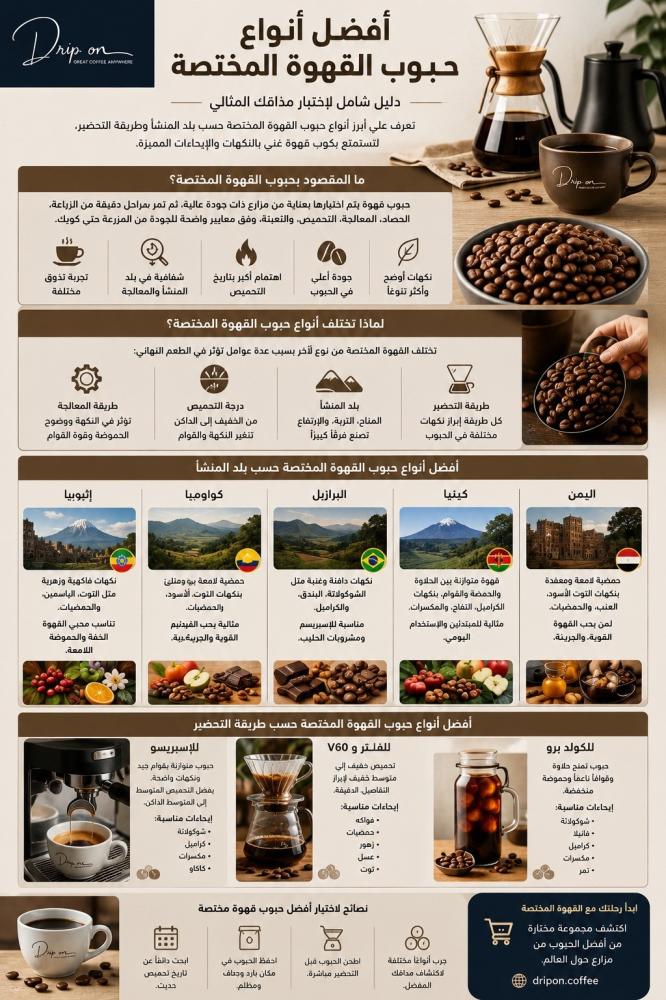
When searching for the best specialty coffee beans, you'll find that the choice isn't solely based on the coffee's name or country of origin. Many factors come into play, including roast level, processing method, aromatic notes, and the ideal brewing method. That's why Drip On helps you understand the available options and choose the perfect specialty coffee beans to suit your taste in an easy and practical way. This guide will introduce you to the most important types, how to compare them, and what makes specialty coffee a different experience from regular commercial coffee.
What are specialty coffee beans?
Specialty coffee beans are carefully selected from high-quality farms and then undergo meticulous stages of cultivation, harvesting, processing, roasting, and packaging. It's not just about the coffee being premium; it's about having clear quality standards that begin at the farm and end in your cup.
Specialty coffee is often characterized by:
- Clearer and more varied flavors.
- Higher quality grains.
- Greater attention was paid to the history of roasting.
- Transparency in the country of origin and processing.
- A different tasting experience depending on each crop.
Therefore, choosing the best types of specialty coffee beans means understanding what suits your taste and preparation method, not just buying the most expensive type available.
Why do specialty coffee beans differ in type?
Specialty coffee varies from one type to another due to several factors that affect the final taste. You might try coffee from Ethiopia and experience fruity and floral notes, then try coffee from Brazil and find it tastes more like chocolate and nuts. Both are excellent, but the experience is different.
The most important factors that make the difference:
1. Country of origin
The country of origin significantly influences flavor due to climate, soil, altitude, and farming methods. Therefore, origin is one of the most important criteria when selecting the best specialty coffee beans .
2. Treatment method
The way coffee beans are processed after harvesting significantly alters the flavor. Washed processing often yields a clean cup with clear acidity, while dried processing produces fruitier flavors and a heavier body.
3. Roasting degree
Light roasting preserves the original notes of the bean, medium roasting provides a balance between acidity and sweetness, and dark roasting brings out the chocolate flavors and a slight bitterness.
4. Preparation method
Not all coffee beans are suitable for all brewing methods. Some types are better suited to espresso, while others shine more with V60, filter, or cold brew.
The best types of specialty coffee beans by country of origin
Choosing coffee based on its country of origin is one of the easiest ways to understand the expected flavor. Here are some of the most popular types among specialty coffee lovers.
1. Ethiopian coffee
Ethiopian coffee is a popular choice for specialty coffee lovers, especially those who enjoy fruity and floral flavors. It often offers hints of berries, jasmine, citrus, or tropical fruits.
Ethiopian coffee is suitable:
- For lovers of light and refreshing coffee.
- Preparation methods using a filter and V60.
- Those who prefer a pronounced acidity.
- Those seeking a different tasting experience.
If you're looking for a cup rich with complex nuances, Ethiopia might be among the best specialty coffee beans worth trying.
2. Colombian coffee
Colombian coffee is known for its beautiful balance of sweetness, acidity, and body. It often has hints of caramel, apple, nuts, or light chocolate. It's ideal for those who want a well-balanced coffee that isn't too acidic or bitter.
Colombian coffee is suitable for:
- Beginners in specialty coffee.
- Lovers of balanced flavors.
- Preparation by filter and espresso.
- Daily use.
Therefore, Colombian coffee is considered one of the best types of specialty coffee beans for those looking for an easy and comfortable cup.
3. Brazilian coffee
Brazilian coffee is an excellent choice for lovers of warm and rich flavors, such as chocolate, hazelnut, cocoa, and caramel. It is often less acidic than African coffee, making it suitable for those who don't like sour coffee.
Brazilian coffee is suitable:
- Espresso.
- Milk drinks such as lattes and cappuccinos.
- Those who prefer a heavier build.
- Those who love chocolate flavors.
If your goal is a comforting, rich, and easy-to-drink coffee, Brazilian coffee is one of the best specialty coffee beans for everyday use.
4. Kenyan coffee
Kenyan coffee is renowned for its bright acidity, full body, and bold flavors. You might detect hints of blackberry, grape, citrus, or brown sugar. It's perfect for those who enjoy a bold and distinctive cup.
Kenyan coffee is suitable:
- Lovers of high acidity.
- The filter and V60.
- Those who are looking for a strong and distinctive flavor.
- Advanced tasting experiences.
Kenyan coffee is not the easiest choice for beginners, but it is one of the best specialty coffee beans for lovers of bold flavors.
5. Yemeni coffee
Yemeni coffee holds a special place in coffee history, often characterized by deep and complex flavors such as spices, dried fruits, dark chocolate, and honey. Its production is relatively limited, so it may be more expensive than some other varieties.
Yemeni coffee is suitable for:
- Lovers of fine coffee.
- Those who want a different experience.
- Quiet manual preparation.
- Luxury gifts for coffee lovers.
Yemeni coffee is among the best types of specialty coffee beans for those seeking an authentic character and unconventional flavor.
Get to know me:
- Large paper coffee cups
- What are the sizes of paper coffee cups?
- specialty coffee scale
- Best local specialty coffee roasters
- What is the difference between coffee and specialty coffee?
The best types of specialty coffee beans according to brewing method
It is not enough to choose the country of origin only; you must also choose the appropriate grains for the preparation method you use daily.
Specialty coffee beans for espresso
Espresso often requires well-balanced beans with good body and pronounced flavors, and many prefer medium or medium-dark roasts. Brazilian and Colombian varieties are often very suitable for espresso, especially if you like a creamy texture and chocolatey notes.
Look for clues such as:
- chocolate.
- Caramel.
- Nuts.
- Brown sugar.
- cocoa.
When choosing the best specialty coffee beans for espresso, pay attention to the roasting date and grind size, as espresso is very sensitive to any slight change.
Specialty coffee beans for filter and V60
Drip coffee reveals the finer details in the beans, so many prefer a light or medium roast with V60 and a filter. Washed Ethiopian, Kenyan, and Colombian coffees typically yield excellent results.
Look for clues such as:
- fruits.
- Citrus fruits.
- Flowers.
- honey.
- Berries.
If you like clean, clear flavors, filter beans are among the best specialty coffee beans that give you a pleasant experience in every cup.
Specialty coffee beans for cold brew
Cold brew requires beans that provide sweetness and a smooth texture with relatively low acidity. Brazilian and Colombian coffees are very suitable for this type of brewing.
The best suggestions for Cold Brew:
- chocolate.
- Vanilla.
- Caramel.
- Nuts.
- It passes.
For better results, use a coarse grind and let the coffee steep for enough hours as per the recipe.
How do you choose the best types of specialty coffee beans according to your taste?
Choosing coffee doesn't have to be complicated. First, ask yourself: What flavor do I like? Then choose accordingly.
If you like fruity coffee
Choose Ethiopian or Kenyan coffee with a light or medium roast. These varieties are suitable for filter and V60 brewing and offer a refreshing acidity.
If you like chocolate coffee
Choose Brazilian or Colombian coffee with a medium roast. These options are suitable for espresso and milk-based drinks.
If you are a beginner
Start with medium-roasted Colombian or Brazilian coffee. These types are often easy to prepare and well-balanced, and are an excellent introduction to the world of premium specialty coffee beans .
If you like different experiences
Try Yemeni, Kenyan, or dried-processed coffees. You'll find bolder, more complex flavors.
Common mistakes when buying specialty coffee beans
Even if you choose an excellent type, you may have an unsatisfactory experience if you make some common mistakes.
Buying a very large quantity
Coffee loses some of its freshness over time. It's best to buy enough to last you for several weeks rather than storing large quantities for an extended period.
Ignore the roasting date
The roasting date is one of the most important quality factors. Freshly roasted coffee often has a better flavor, especially when prepared by filter or espresso.
Choosing coffee based solely on price
Price doesn't always mean coffee is right for you. The most expensive coffee might have a high acidity level that doesn't suit your taste, while a mid-priced coffee might be perfect for you.
Using an unsuitable grinding mill
Even the best specialty coffee beans can give a poor result if the grind is not suitable for the brewing method.
Tips for preparing a better cup
To benefit from the quality of the grains, follow these practical tips:
- Grind the coffee just before brewing, if possible.
- Use filtered water to improve the taste.
- Adjust the grind setting according to the preparation method.
- Do not use boiling water directly.
- Store the coffee in an airtight container.
- Try different recipes until you find the right balance.
- Write down your observations about each coffee you try.
These simple steps will help you discover the differences between the best specialty coffee beans and enjoy a more professional experience at home.
How to store specialty coffee beans
Proper storage preserves the flavor for as long as possible. Coffee is affected by air, humidity, heat, and light, so it must be stored in a suitable place.
The best way to store it:
- Use a tightly sealed container.
- Keep coffee away from sunlight.
- Avoid placing it near the oven or heat sources.
- Do not grind the entire quantity at once.
- Buy small quantities according to your consumption.
Proper storage makes the experience of the best specialty coffee beans more consistent and preserves the original aromas of the beans.
Are whole grains better than ground coffee?
Yes, in most cases, whole beans are better than ground coffee in terms of freshness and flavor. When coffee is ground, the aromas and essential oils begin to dissipate more quickly, so it's advisable to buy whole beans and grind them just before brewing.
But if you do not own a grinder, you can buy ground coffee, provided that you choose the appropriate grind size for the method of preparation and consume it within a short period of time.
How do you know if specialty coffee is right for you?
The right coffee isn't necessarily the highest-rated or most expensive; it's the coffee you enjoy every day. When trying a new type, pay attention to:
- Is acidity comfortable?
- Is the consistency light or heavy?
- Is the flavor close to your taste?
- Does your preparation method suit you?
- Is it suitable for daily consumption or just for experimentation?
This way you can determine the best types of specialty coffee beans for you, instead of relying on general recommendations only.
Choosing the best specialty coffee beans depends on a combination of personal taste, country of origin, processing method, roast level, and brewing technique. Ethiopian and Kenyan coffees are suitable for those who prefer fruity notes and pronounced acidity, while Brazilian and Colombian coffees are ideal for those who prefer balance, chocolate, and a rich body. Yemeni coffee, on the other hand, offers a luxurious and complex experience for those who appreciate something different.
Start by deciding on your brewing method, then choose beans according to your preferred flavor, paying attention to freshness, storage, and grind. With experimentation, you'll discover the best specialty coffee beans to suit your taste and give you a great cup every day.
